
In this article
A well-managed crypto portfolio needs reliable tax records alongside a considered investment strategy. Australia’s announced capital gains tax reforms and proposed reporting framework make that preparation especially relevant as 2027 approaches.
These are separate developments: CGT reform changes the calculation of gains, while reporting reform changes the information available to tax authorities. This guide distinguishes the announced changes from Treasury’s draft reporting legislation, based on official material reviewed on 31 October 2026.
The announced CGT changes
The 2026–27 Budget announces a replacement for the 50% CGT discount from 1 July 2027, using an inflation-based discount and a minimum 30% tax on gains. This is a broader investment tax reform, rather than a crypto-only measure.
Under the announced approach, tax applies to real capital growth after allowing for inflation. The 30% minimum is a floor, not a promise that every investor will pay a flat 30% rate. The outcome depends on the applicable rules and your circumstances.
The Budget says the new arrangements apply to gains arising after 1 July 2027. Keep acquisition records and evidence of historical values so pre-transition and post-transition growth can be supported. Confirm the final calculation and valuation requirements with your adviser before relying on a particular snapshot or apportionment method.
Domestic crypto reporting: a draft framework
Treasury released draft crypto tax transparency legislation in October 2026, with consultation closing on 28 October. The package proposes a domestic reporting regime for transactions involving Australian residents, implementation of the OECD Crypto-Asset Reporting Framework (CARF), and updates to the Common Reporting Standard (CRS).
At the time of review, this source is an exposure draft. Investors should not treat proposed commencement dates, reporting frequency or individual data fields as settled requirements. Monitor the final legislation and ATO implementation guidance.
Offshore platforms and international transparency
CARF is designed to support the exchange of crypto information between tax authorities. The draft Australian package brings that international framework together with domestic reporting and CRS changes. An offshore exchange should not be treated as a substitute for complete Australian tax records.
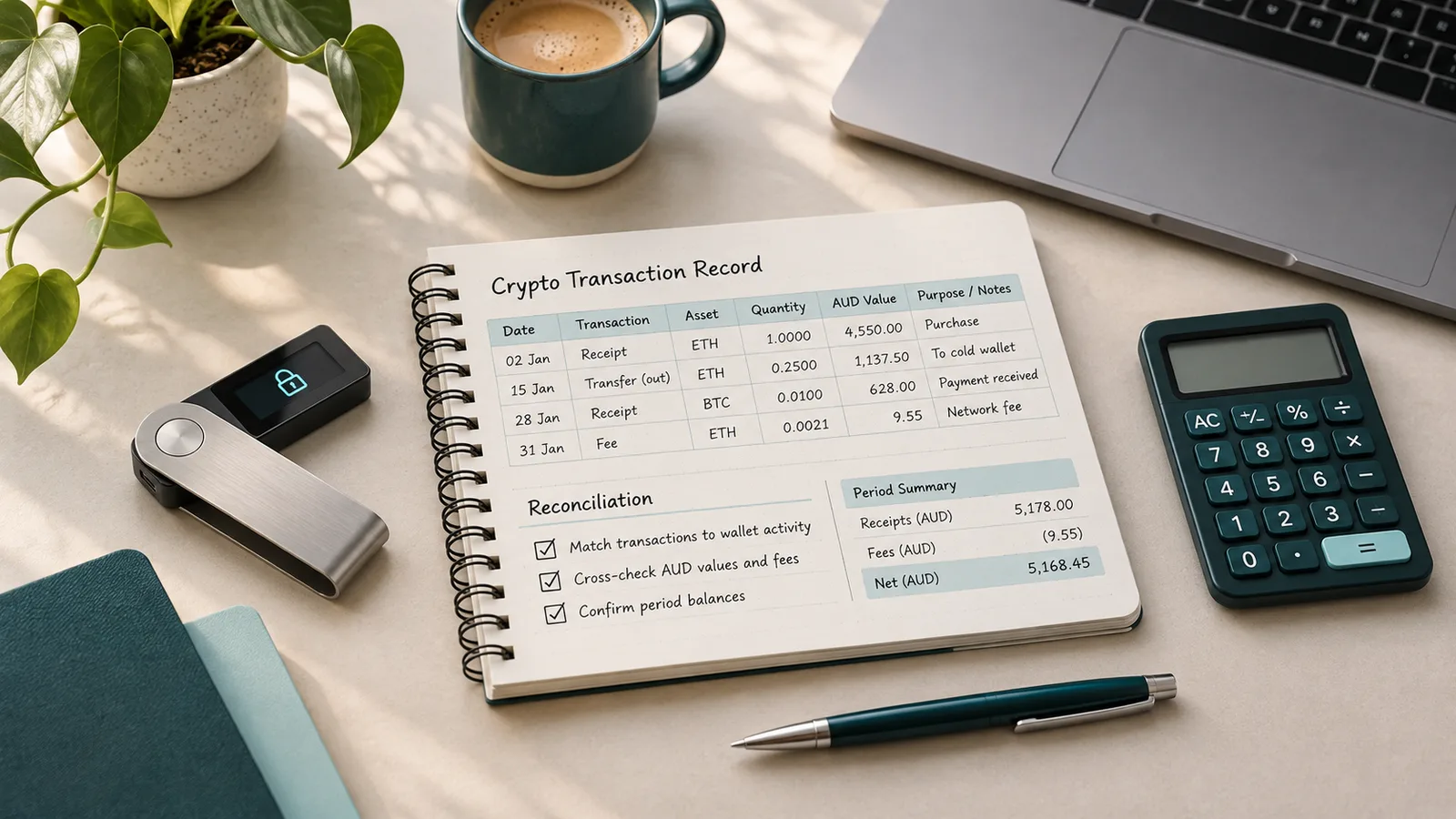
Keep a consolidated history across exchanges, wallets and chains. Platform reports are useful inputs, but they may not capture your full cost base, transfers or activity elsewhere.
Prepare your records and review your structure
Use the lead-up to 2027 to make your records complete and your assumptions explicit.
- Export transaction histories regularly, including closed exchange accounts and older wallets.
- Reconcile acquisitions, disposals, fees and transfers, retaining AUD valuation evidence and transaction identifiers.
- Review how your software handles staking, DeFi and cross-chain activity before relying on its tax report.
- Discuss valuation evidence, the transition and your ownership structure with a specialist crypto accountant. Check SMSF treatment separately rather than applying personal investor assumptions to a fund.
Final thoughts
Good preparation starts with a defensible transaction history. I can help reconcile your crypto records and review what the changing tax and reporting landscape means for your circumstances before you make structural decisions.
Personalised support
Need help with crypto tax?
Talk through your situation and find out what support is right for you.
Sources & further reading
This article is general information only and doesn't consider your personal circumstances. Rules change, so please check with me or the ATO before acting on it.
Back to all articles