
In this article
The ATO treats cryptocurrency as an asset, usually subject to capital gains tax (CGT). The trouble is that crypto makes it easy to trigger a tax event without receiving a cent of cash.
When a CGT event happens
You generally have a CGT event whenever you dispose of crypto. That includes:
- Selling crypto for Australian dollars
- Swapping one crypto for another
- Spending crypto on goods or services
- Gifting crypto to someone else
The 12-month discount
If you're an individual (or a trust or SMSF in some cases) and you've held the asset for more than 12 months, you may be eligible for a CGT discount on the gain. Capital losses can be used to offset capital gains.
When crypto is income
Some crypto receipts are treated as ordinary income rather than capital gains, such as certain staking rewards or airdrops, or crypto received as payment for work. If you run a business or trade crypto in a business-like way, different rules can apply.
Records to keep
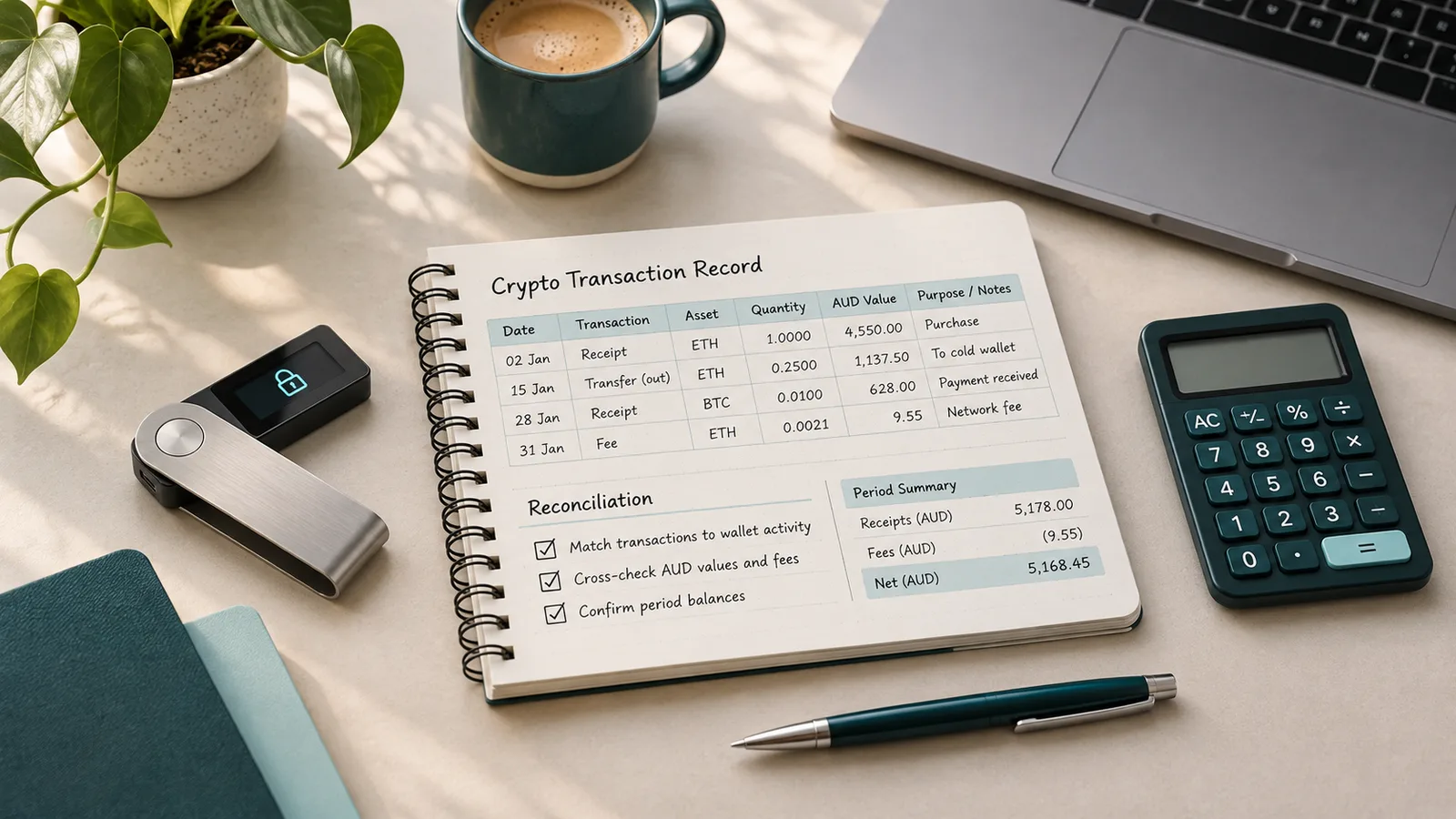
The ATO expects records for each transaction. Keep exports from every exchange, and save these details:
- The date of each transaction
- The value in Australian dollars at the time
- What the transaction was for, and who the other party was
- Wallet addresses and transfer records between your own wallets
Common mistakes
The most common ones are forgetting crypto-to-crypto swaps, treating transfers between your own wallets as sales, and losing exchange history after a platform shuts down. Download your records regularly.
Final thoughts
If your records are in a state, I can reconcile everything and work out what you owe. See my crypto tax service for details.
Personalised support
Need help with crypto tax?
Talk through your situation and find out what support is right for you.
This article is general information only and doesn't consider your personal circumstances. Rules change, so please check with me or the ATO before acting on it.
Back to all articles