

In this article
If an Australian exchange asks who controls a destination wallet or which platform will receive your withdrawal, those questions may form part of its Travel Rule and anti-money laundering checks.
The Travel Rule concerns information accompanying transfers through regulated providers. It has nothing to do with carrying a hardware wallet through an airport. Understanding the distinction helps you plan transfers and assess what a platform is asking you to disclose.
What the Travel Rule does
AUSTRAC’s framework requires relevant businesses to collect, verify and pass on specified information about transfers. For virtual asset service providers, covered non-incidental transfers can be domestic or international.
The obligations sit with the regulated businesses involved. As a customer, you may need to provide accurate sender, recipient and destination details before a transfer can proceed. Requirements depend on the transfer and the provider’s role; there is no blanket exemption simply because a crypto transfer is small.
When the requirements apply
AUSTRAC’s transitional guidance deferred relevant obligations for new virtual asset services until 1 July 2026. That means the framework is already relevant to Australian investors, although particular reporting obligations have separate transition dates.
Providers implement their own customer workflows. An exchange may offer a saved address book or ask additional questions about a destination, but saving an address does not guarantee that future transfers will avoid further checks. Allow time for review before a time-sensitive transfer.
Self-custody and cold storage
Self-custody remains possible. AUSTRAC distinguishes custodial wallets from self-hosted wallets, and provides an exemption from the travel rule for transfers to self-hosted wallets. Providers still have related due diligence obligations, including collecting payee information and considering verification of wallet control.
It is too broad to say every investor must sign a message or make a test transaction: the checks depend on the provider’s policies and the circumstances. Separate reporting for transfers involving unverified self-hosted wallets begins on 31 March 2029 under the transitional arrangements.
A direct transfer between individuals using their own wallets, without a regulated intermediary providing the relevant service, is different from an exchange withdrawal. That does not remove any tax consequences or other legal obligations.
Personal information and practical security
Travel Rule messages are separate from public blockchain transactions. The framework requires providers to consider whether counterparties can receive transfer messages securely and keep them confidential. This does not make any platform immune to a data breach.
Treat requests for information with the same care as any other financial account interaction. Use the provider’s official app or website, review its privacy practices, and share only what is needed through the approved channel. Never disclose a seed phrase or private key to verify wallet ownership.
- Confirm the destination wallet address, network and recipient details before submitting a transfer.
- Check your exchange’s current withdrawal requirements before moving a significant holding.
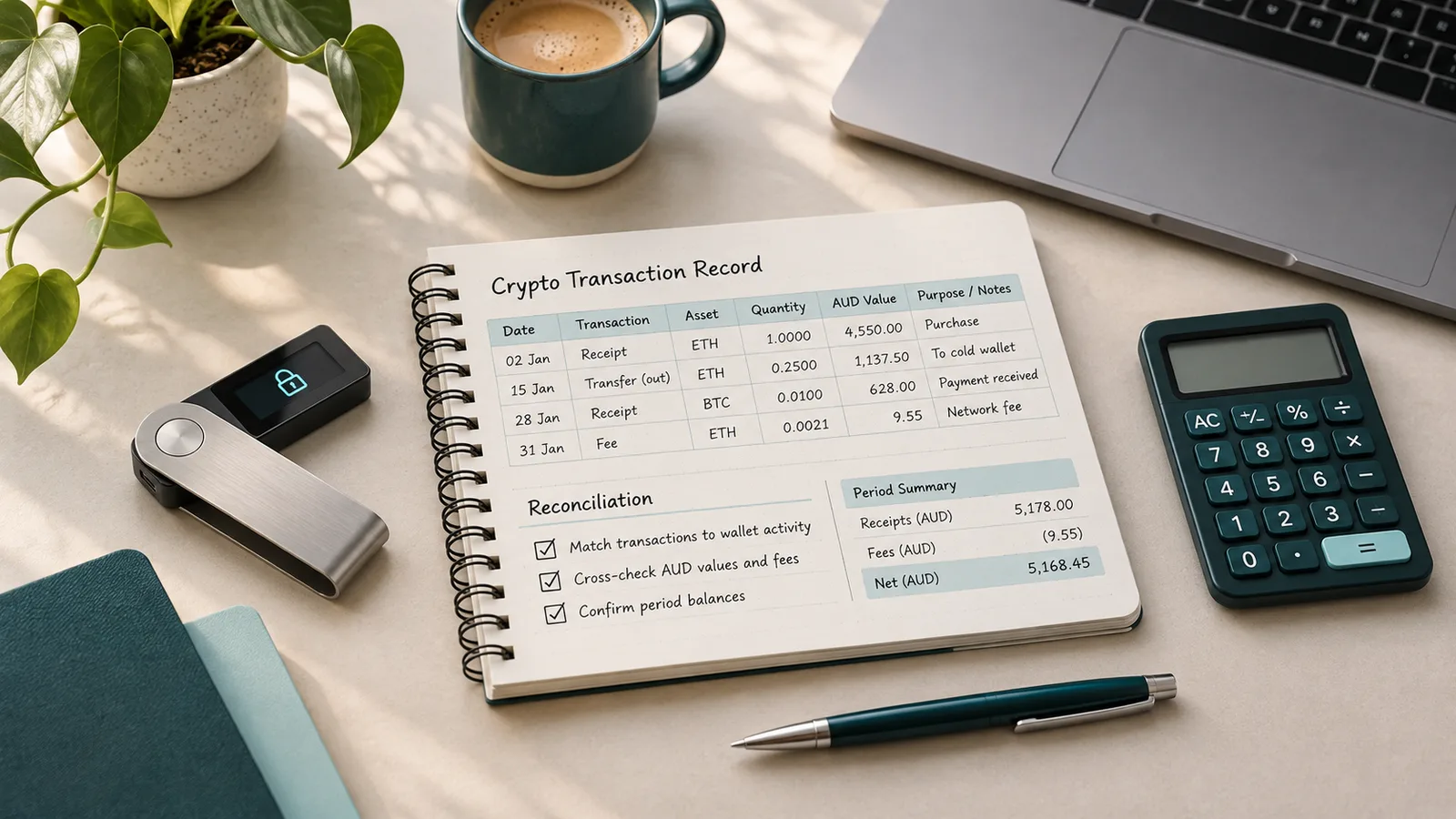
- Keep transfer identifiers and evidence that links movements between your own wallets.
- Use strong account security and keep recovery material offline and private.
Final thoughts
For experienced investors, the practical task is to keep custody, compliance and tax records aligned. I can help reconcile exchange and wallet activity so transfers between your own holdings are documented clearly alongside taxable disposals.
Personalised support
Need help with crypto tax?
Talk through your situation and find out what support is right for you.
Sources & further reading
This article is general information only and doesn't consider your personal circumstances. Rules change, so please check with me or the ATO before acting on it.
Back to all articles